Key Facts
Appearance on private flight manifests and entry in Epstein's address book
Documented Touchpoints
SDNY Court Exhibits & Palm Beach Police Files
Never accused of any unlawful conduct, civil liability, or knowledge of abuse
Legal Status
SDNY Case Records
Early 2000s, preceding Epstein's 2008 Florida conviction
Time Period of Contact
Pilot Flight Manifests

Guy Oseary · Talent manager and venture capitalist
In the sprawling documentary record assembled across two decades of investigations into Jeffrey Epstein, few dynamics are as revealing as the late financier's systematic pursuit of cultural influence. Epstein did not merely seek out politicians, royalty, and billionaire financiers; he aggressively cultivated architects of modern popular culture and entertainment. Among the prominent entertainment figures whose contact information and occasional travel intersected with Epstein’s apparatus was Guy Oseary, the veteran talent manager, music executive, and venture capitalist widely celebrated for guiding the careers of Madonna and U2, as well as co-founding influential investment funds in Silicon Valley. While Oseary’s inclusion in Epstein’s archival footprint reflects an overlap of elite social networks rather than any documented complicity in criminal acts, his presence in these primary records provides an instructive case study into how Epstein engineered proximity to global tastemakers.
Guy Oseary rose to prominence in the American music industry at an exceptionally young age, joining Maverick Records shortly after its creation by Madonna and Time Warner in 1992. By the late 1990s, Oseary had become the label's chairman, subsequently transforming himself into a premier talent manager and, later, a significant force in early-stage tech financing alongside partners like Ashton Kutcher through A-Grade Investments and Sound Ventures. Oseary operated precisely at the crossroads of entertainment, technology, and transatlantic capital—an ecosystem that Epstein vigorously pursued throughout his adult life. To Epstein, whose power rested largely on perceived access and social prestige, figures capable of commanding global media franchises represented the ultimate currency of legitimacy.
The documentary connection between Oseary and Epstein entered the public sphere primarily through two distinct evidentiary caches: Epstein’s personal contact directory, colloquially known as the little black book, and the flight manifests compiled by Epstein’s private pilots. The contact directory, initially purloined by an employee at Epstein’s Palm Beach mansion in the mid-2000s and later entered into federal court dockets, listed Oseary among thousands of figures from public life. The entry contained standard executive and personal contact numbers, illustrating that Epstein’s staff maintained direct access to Oseary during the early 2000s. In elite circles, inclusion in Epstein’s Rolodex was common for individuals who moved through high-level philanthropic, financial, or entertainment environments, but the directory itself did not delineate the depth or frequency of personal interaction.
Related articles

Jeffrey Epstein and Peggy Siegal
Investigative report on publicist Peggy Siegal and her documented role in Jeffrey Epstein's post-conviction social rehabilitation in Manhattan.
Read article →
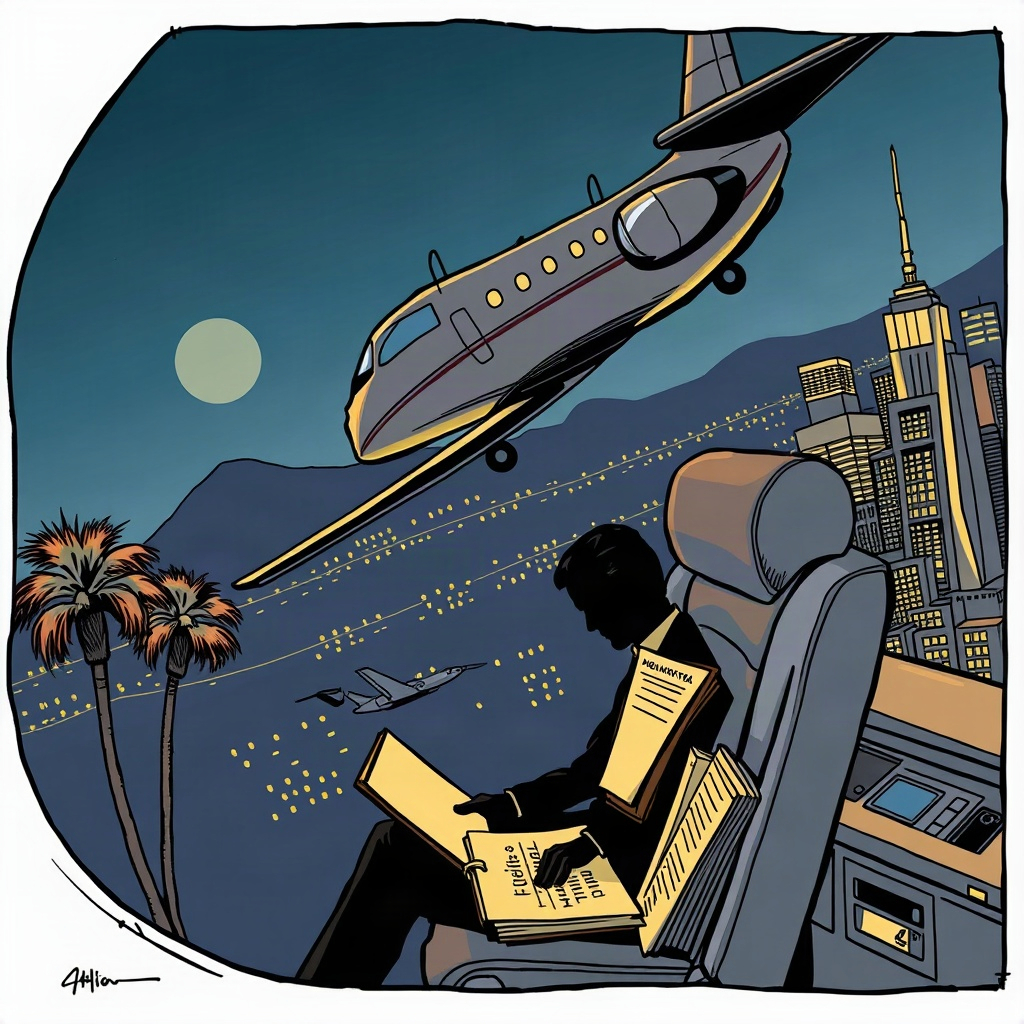
Jeffrey Epstein and Steve Bing
Investigative review of Hollywood producer Steve Bing's documented appearances in Jeffrey Epstein's flight logs, contact books, and elite networks.
Read article →
Jeffrey Epstein and Jean-Luc Brunel
Investigative dossier detailing modeling agent Jean-Luc Brunel's financial ties to Jeffrey Epstein, sexual abuse allegations, and his 2022 death in custody.
Read article →

Jeffrey Epstein and Linda Fiorentino
An investigative examination of actress Linda Fiorentino's appearance in Jeffrey Epstein's contact records and their documented social intersections.
Read article →