Jeffrey Epstein &
Guido Westerwelle
Former Foreign Minister of Germany
Key Facts
German Foreign Minister and Vice Chancellor (2009–2013)
Official Capacity
German Federal Foreign Office Archives
Zero appearances across all released flight manifests
Flight Log Status
U.S. v. Maxwell Trial Evidence (2021)
Unilateral institutional directory entry without evidence of personal contact
Nature of Connection
Giuffre v. Maxwell Unsealed Records (2024)
No documented donations or grants between Epstein entities and Westerwelle Foundation
Financial / Foundation Ties
Westerwelle Foundation Disclosure Records
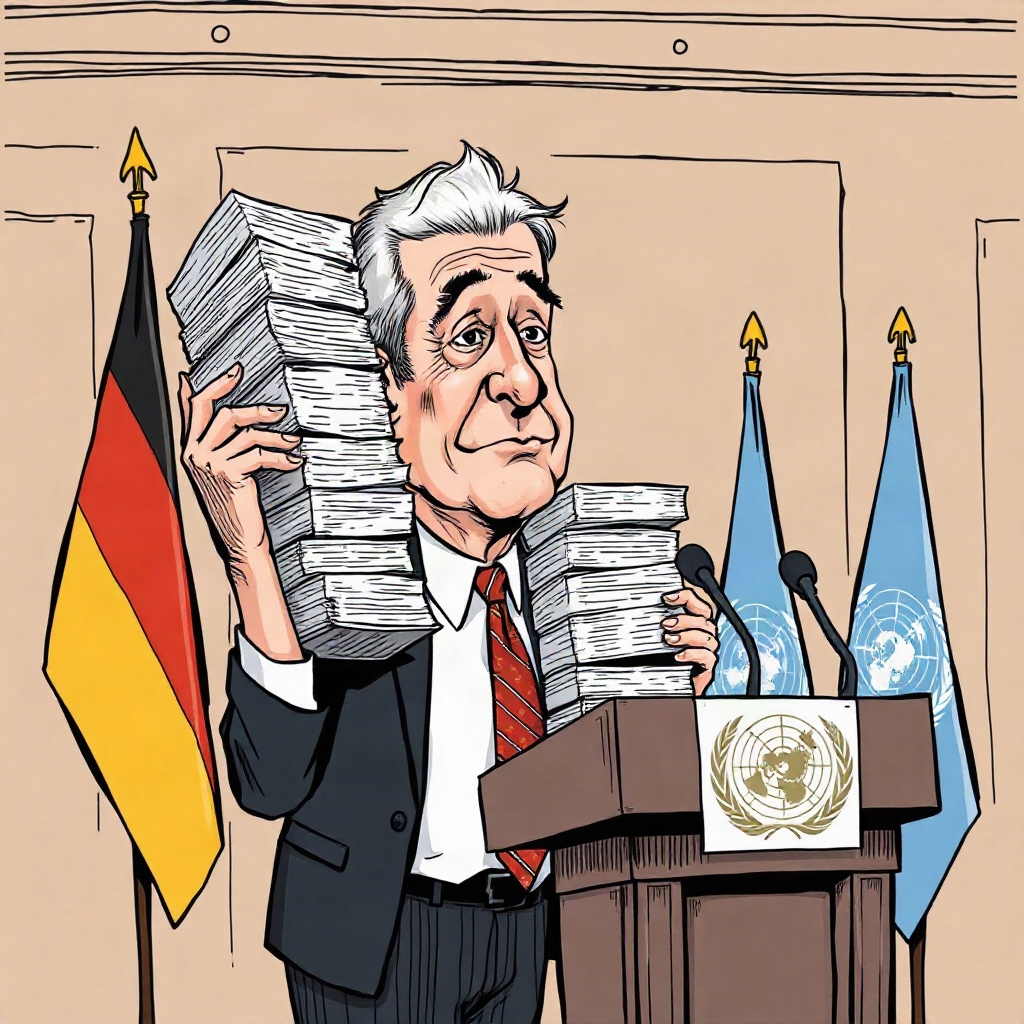
Guido Westerwelle · Former Foreign Minister of Germany
The post-mortem scrutiny surrounding Jeffrey Epstein’s international Rolodex has cast a wide, often indiscriminate net across the global political establishment. Following the piecemeal unsealing of federal court records, flight logs, and personal contact directories from 2019 through early 2024, researchers and journalists have meticulously cross-referenced hundreds of prominent public figures against Epstein’s network. Among the European statesmen whose names have drawn archival examination is the late Guido Westerwelle, who served as Germany’s Foreign Minister and Vice Chancellor from 2009 to 2013. Determining the precise nature, or total absence, of any relationship between the disgraced American financier and one of Germany’s most consequential post-reunification diplomats requires navigating unsealed Southern District of New York records, flight registries, diplomatic itineraries, and the established modus operandi of Epstein’s influence-seeking operations.
Guido Westerwelle rose to international prominence as the long-serving chairman of Germany’s Free Democratic Party, guiding the pro-business faction into a governing coalition with Chancellor Angela Merkel’s Christian Democratic Union following the 2009 federal elections. During his tenure as Foreign Minister, Westerwelle navigated pivotal transatlantic moments, including the Arab Spring, diplomatic negotiations surrounding Iran’s nuclear program, and European economic debates following the 2008 financial crash. Following his exit from elected politics in late 2013, Westerwelle founded the Westerwelle Foundation in Berlin, focused on fostering international entrepreneurship. His public life was abruptly cut short in 2014 when he was diagnosed with acute myeloid leukemia, leading to his death in Cologne in March 2016 at the age of fifty-four.
The prospect of any intersection between Westerwelle and Epstein emerged in media discussions and online archival reviews following the unsealing of court files from Giuffre v. Maxwell in the U.S. District Court for the Southern District of New York. The unsealed tranches revealed how aggressively Epstein sought out foreign ministers, ambassadors, and diplomats, often utilizing philanthropic covers or international think tanks to gain access to foreign delegations during United Nations General Assembly weeks in New York. Epstein frequently weaponized relationships with figures such as former Norwegian diplomat Terje Rød-Larsen and former Israeli Prime Minister Ehud Barak to project diplomatic influence across European and Middle Eastern policy circles.
Related articles
Jeffrey Epstein and Thorbjørn Jagland
Investigative report examining the diplomatic meetings between Jeffrey Epstein and former Norwegian Prime Minister Thorbjørn Jagland in 2013.
Read article →
Jeffrey Epstein and Terje Rød-Larsen
Investigative review of Norwegian diplomat Terje Rød-Larsen's ties to Jeffrey Epstein, detailing secret loans, institutional funding, and his resignation.
Read article →
Jeffrey Epstein and Mona Juul
Investigative report examining Norwegian diplomat Mona Juul's documented social ties to Jeffrey Epstein through her husband, Terje Rød-Larsen.
Read article →

Jeffrey Epstein and Andrés Pastrana
Investigative examination of former Colombian President Andrés Pastrana's documented flights on Jeffrey Epstein's aircraft and related unsealed records.
Read article →