Jeffrey Epstein &
Ernesto Zedillo
Former President of Mexico
Key Facts
Contact entry in Epstein's address book with administrative phone numbers
Nature of Documented Connection
Epstein 'Black Book' (Circa 2004–2005)
No documented flights aboard Epstein's private aircraft
Flight Manifest Records
FAA & Court Flight Disclosures (2019)
Never charged, investigated, or named as a co-conspirator or perpetrator
Legal Status
SDNY Court Filings
Included in unsealed exhibits during federal civil litigation
Document Releases
Giuffre v. Maxwell (January 2024)
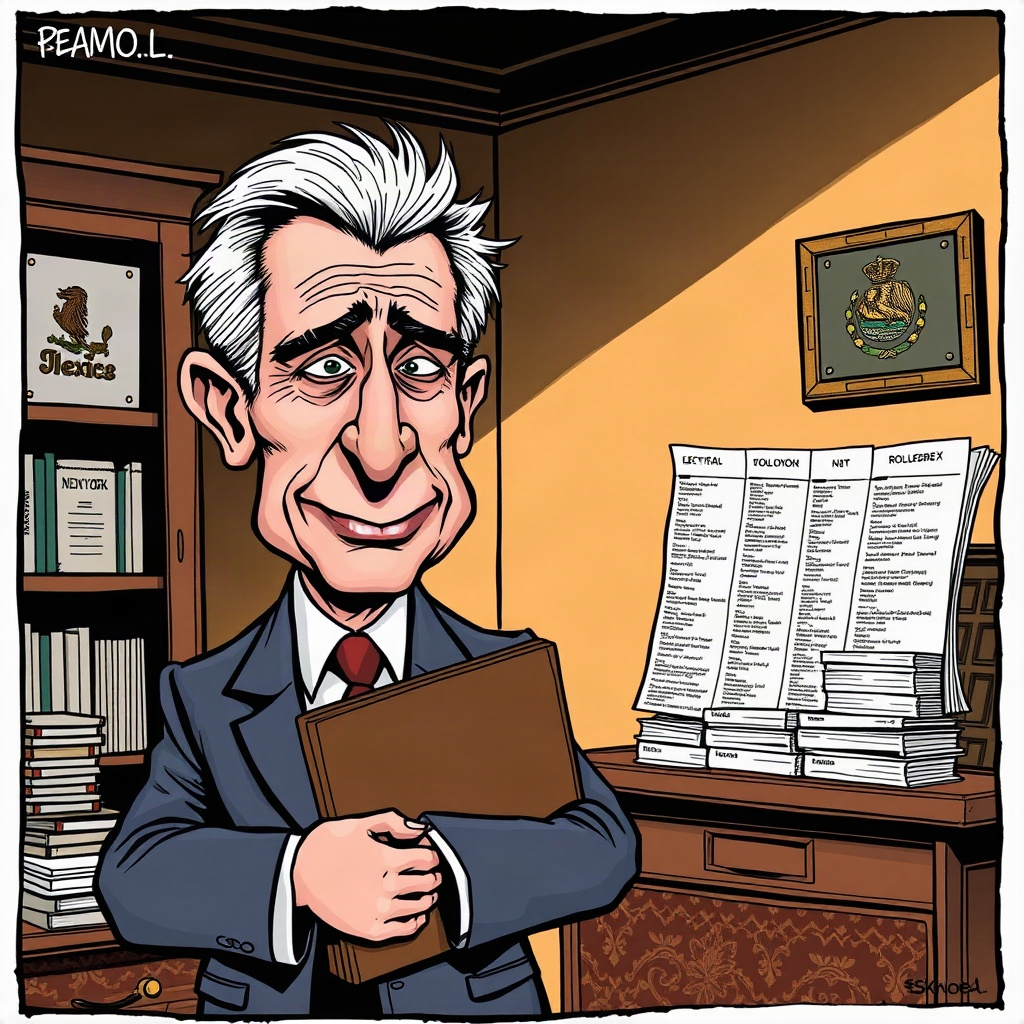
Ernesto Zedillo · Former President of Mexico
The investigative aftermath of Jeffrey Epstein’s arrest and subsequent death in 2019 exposed a vast, meticulously organized repository of global figures spanning politics, academia, and high finance. Among the numerous world leaders recorded within Epstein’s extensive rolodex is Ernesto Zedillo Ponce de León, who served as the President of Mexico from 1994 to 2000. Zedillo’s appearance in records associated with the convicted sex offender underscores Epstein’s persistent strategy of curating contacts among former heads of state, international technocrats, and elite institutional leaders. A critical examination of public documents, unsealed court files, and reporting reveals the precise nature of Zedillo's presence in these archives, while delineating documented contacts from unsubstantiated conjecture.
Ernesto Zedillo entered the international spotlight during a pivotal era in modern Mexican history. An economist trained at the National Polytechnic Institute and Yale University, Zedillo assumed the Mexican presidency following the 1994 assassination of ruling Institutional Revolutionary Party candidate Luis Donaldo Colosio. His administration navigated the severe financial fallout of the December 1994 peso devaluation, implemented structural economic reforms, and oversaw political openings that culminated in Mexico’s historic democratic transition in the 2000 elections. Following his presidency, Zedillo transitioned into global academia and corporate governance. In 2002, he was appointed Director of the Yale Center for the Study of Globalization and joined the boards of major multinational corporations, including Citigroup, Alcoa, and the Union Pacific Corporation, alongside memberships in elite non-governmental institutions such as the Trilateral Commission and the World Economic Forum.
The primary documentary evidence connecting Zedillo to Epstein comes from Epstein’s personal address book, commonly referred to in investigative and legal proceedings as the black book. Compiled by Epstein’s domestic staff during the late 1990s and early 2000s, the directory served as an operational index for Epstein's global networking. Zedillo is entered alphabetically under the letter Z, complete with direct contact numbers and office references corresponding to his post-presidential positions. The directory was first made public in redacted form in 2015 and later released unredacted during subsequent journalistic investigations, demonstrating that Epstein maintained contact channels to Zedillo alongside numerous other sitting and former world leaders, including Ehud Barak, Bill Clinton, and Andrés Pastrana.
Related articles

Jeffrey Epstein and Thorbjørn Jagland
Investigative report examining the diplomatic meetings between Jeffrey Epstein and former Norwegian Prime Minister Thorbjørn Jagland in 2013.
Read article →
Jeffrey Epstein and Terje Rød-Larsen
Investigative review of Norwegian diplomat Terje Rød-Larsen's ties to Jeffrey Epstein, detailing secret loans, institutional funding, and his resignation.
Read article →

Jeffrey Epstein and Mona Juul
Investigative report examining Norwegian diplomat Mona Juul's documented social ties to Jeffrey Epstein through her husband, Terje Rød-Larsen.
Read article →

Jeffrey Epstein and Andrés Pastrana
Investigative examination of former Colombian President Andrés Pastrana's documented flights on Jeffrey Epstein's aircraft and related unsealed records.
Read article →