Jeffrey Epstein &
Claude Guéant
Former French Minister of the Interior
Key Facts
Minister of the Interior (2011–2012) and Chief of Staff to Nicolas Sarkozy (2007–2011)
Guéant Public Role
French Government Official Gazettes
Avenue Foch apartment, 16th arrondissement, seized and searched by French police in 2019
Epstein Paris Property
Parquet de Paris
Contact coordinates recorded in Epstein's personal directory; no criminal charges related to Epstein filed against Guéant
Nature of Connection
Mediapart / French Public Record
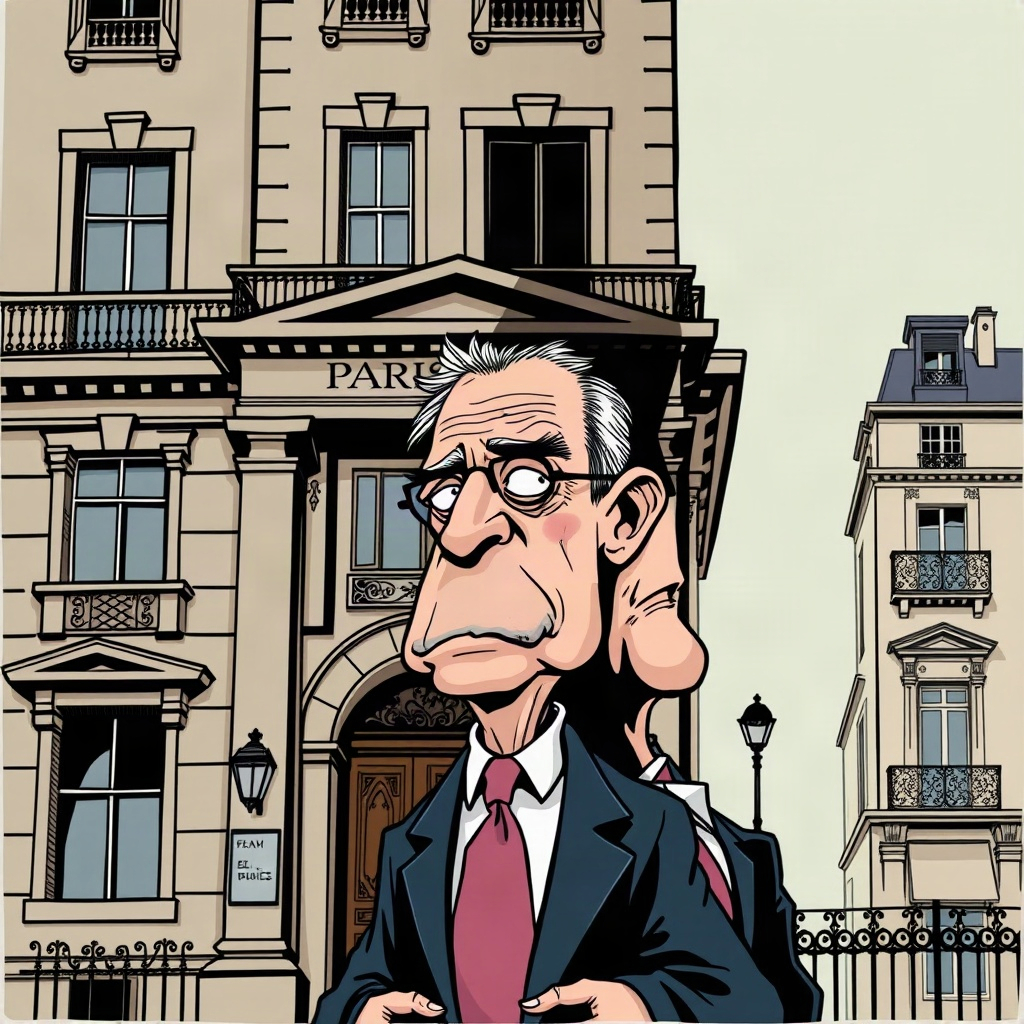
Claude Guéant · Former French Minister of the Interior
For decades, the late financier Jeffrey Epstein cultivated an expansive web of influence that crossed the Atlantic, anchoring his European operations in a lavish 800-square-meter apartment on the Avenue Foch in Paris. When federal prosecutors in New York unsealed charges against Epstein in July 2019, French authorities initiated their own preliminary inquiry to determine the extent of his illicit operations on French soil. As investigators and journalists sifted through seized digital records, personal address books, and visitor registries, several prominent figures within the French political establishment emerged in connection with Epstein's network. Among the most notable names scrutinized in public reporting was Claude Guéant, a career civil servant who served as the Secretary-General of the Élysée Palace and later as the Minister of the Interior under President Nicolas Sarkozy.
Claude Guéant was long regarded as one of the most powerful political operators in contemporary French history. Often described by the French press as Sarkozy’s cardinal or right hand, Guéant wielded immense influence over the state apparatus between 2007 and 2012. As Minister of the Interior from 2011 to 2012, he presided over national law enforcement, domestic intelligence, and border security. Prior to and following his ministerial tenure, Guéant moved within elite Parisian circles that frequently intersected with high-finance figures, foreign dignitaries, and international socialites. In subsequent years, Guéant faced intense legal scrutiny within France over unrelated political finance affairs, including the long-running probe into the alleged Libyan financing of Sarkozy's 2007 presidential campaign, which resulted in multiple convictions and prison sentences for unrelated financial crimes.
The intersection between Guéant and Epstein first drew sustained journalistic scrutiny through the release of Epstein's contact records, commonly referred to as his black books, and subsequent French investigative journalism following Epstein's death in August 2019. In these directories, compiled by Epstein’s personal assistants across decades to manage his vast transatlantic social and professional relationships, Guéant’s contact details appeared alongside numerous other figures of international diplomacy, government, and finance. French investigative outlets, including Mediapart and Le Monde, reviewed these materials alongside flight manifests and judicial filings to reconstruct how Epstein navigated French elite circles.
Related articles

Jeffrey Epstein and Thorbjørn Jagland
Investigative report examining the diplomatic meetings between Jeffrey Epstein and former Norwegian Prime Minister Thorbjørn Jagland in 2013.
Read article →

Jeffrey Epstein and Terje Rød-Larsen
Investigative review of Norwegian diplomat Terje Rød-Larsen's ties to Jeffrey Epstein, detailing secret loans, institutional funding, and his resignation.
Read article →

Jeffrey Epstein and Mona Juul
Investigative report examining Norwegian diplomat Mona Juul's documented social ties to Jeffrey Epstein through her husband, Terje Rød-Larsen.
Read article →

Jeffrey Epstein and Andrés Pastrana
Investigative examination of former Colombian President Andrés Pastrana's documented flights on Jeffrey Epstein's aircraft and related unsealed records.
Read article →