Jeffrey Epstein &
Boutros Boutros-Ghali
Former Secretary-General, United Nations
Key Facts
Listed in Epstein's 97-page personal contact directory ('Black Book') with Paris and Cairo phone numbers
Documentary Connection
Epstein Address Book (circa 2004)
No documented passenger entries on Epstein's aircraft manifests
Flight Log Records
Subpoenaed FAA Flight Logs, SDNY
Zero criminal allegations, victim citations, or sworn claims of misconduct
Allegations of Impropriety
SDNY Court Filings & Palm Beach Police Reports
Late 1990s through early 2000s while Boutros-Ghali was based in Paris and Epstein frequented Avenue Foch
Diplomatic Overlap Period
Investigative Records
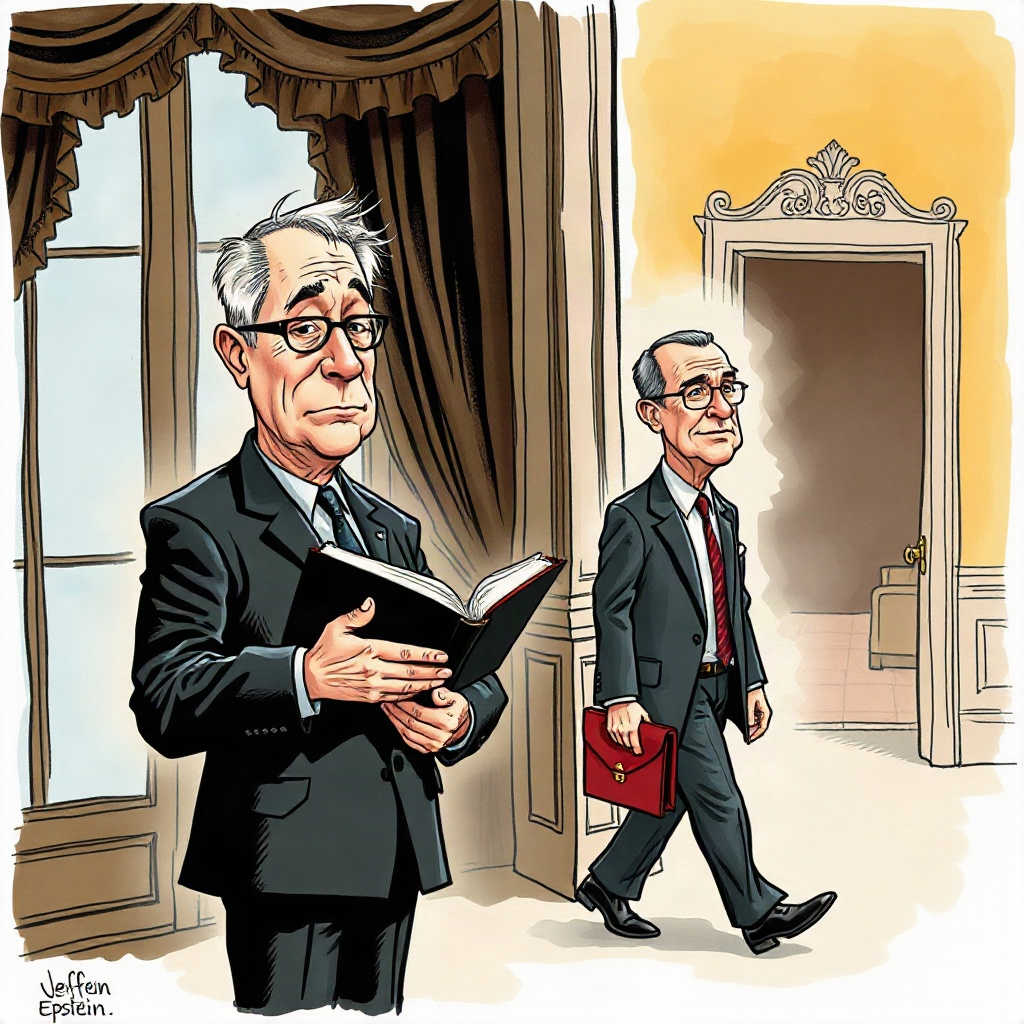
Boutros Boutros-Ghali · Former Secretary-General, United Nations
The expansive web of influence constructed by Jeffrey Epstein relied heavily on the prestige of international diplomacy, institutional power, and global governance. Among the prominent world leaders, royalty, and corporate executives preserved in Epstein’s personal archives sits Boutros Boutros-Ghali, the Egyptian diplomat who served as the sixth Secretary-General of the United Nations from 1992 to 1996. The appearance of Boutros-Ghali’s name within Epstein’s personal records reflects the financier’s relentless campaign to cultivate proximity to elite statesmen and global multilateral organizations, raising ongoing questions about the breadth of Epstein’s diplomatic reach and the extent to which international dignitaries were drawn into his orbit.
Boutros Boutros-Ghali was one of the most recognizable international diplomats of the late twentieth century. Born into an influential Coptic Christian family in Cairo, he served as Egypt’s Minister of State for Foreign Affairs under President Anwar Sadat and played a pivotal role in negotiating the 1978 Camp David Accords. In 1992, he ascended to the pinnacle of global diplomacy as UN Secretary-General during an era marked by the post-Cold War dissolution of national borders, the Persian Gulf crisis, and catastrophic conflicts in Rwanda, Somalia, and the former Yugoslavia. After his contentious single term as Secretary-General, which ended after the United States vetoed his reelection, Boutros-Ghali served as Secretary-General of the Organisation internationale de la Francophonie from 1997 to 2002. Throughout his career, he operated at the apex of Parisian and international high society until his death in Cairo in February 2016 at the age of ninety-three.
The primary physical record connecting Boutros-Ghali to Epstein is the financier’s bound personal contact directory, colloquially dubbed the black book, which was compiled by his household staff and assistants between the late 1990s and early 2000s. The document, which entered the public domain after being seized and subsequently leaked prior to formal court releases, contains thousands of entries cataloging heads of state, members of European royalty, business executives, and cultural figures. Within this directory, Boutros-Ghali is listed alongside specific contact telephone numbers and residential coordinates spanning his primary spheres of residence in Paris and Cairo. The contact entries demonstrate that Epstein’s staff maintained active communication pathways to the former UN chief during his post-Secretariat years.
Related articles

Jeffrey Epstein and Thorbjørn Jagland
Investigative report examining the diplomatic meetings between Jeffrey Epstein and former Norwegian Prime Minister Thorbjørn Jagland in 2013.
Read article →

Jeffrey Epstein and Terje Rød-Larsen
Investigative review of Norwegian diplomat Terje Rød-Larsen's ties to Jeffrey Epstein, detailing secret loans, institutional funding, and his resignation.
Read article →

Jeffrey Epstein and Mona Juul
Investigative report examining Norwegian diplomat Mona Juul's documented social ties to Jeffrey Epstein through her husband, Terje Rød-Larsen.
Read article →

Jeffrey Epstein and Andrés Pastrana
Investigative examination of former Colombian President Andrés Pastrana's documented flights on Jeffrey Epstein's aircraft and related unsealed records.
Read article →