Key Facts
Listed in Epstein's compiled contact directory with SoHo studio contact information
Record Appearance
Palm Beach Police Department Records (2006)
No record of travel on any Jeffrey Epstein private aircraft
Flight Manifest Status
Federal Aviation Administration Manifest Disclosures
Never accused of wrongdoing, deposed, or named as a person of interest in Epstein criminal or civil cases
Legal Status
SDNY and Giuffre v. Maxwell Court Filings
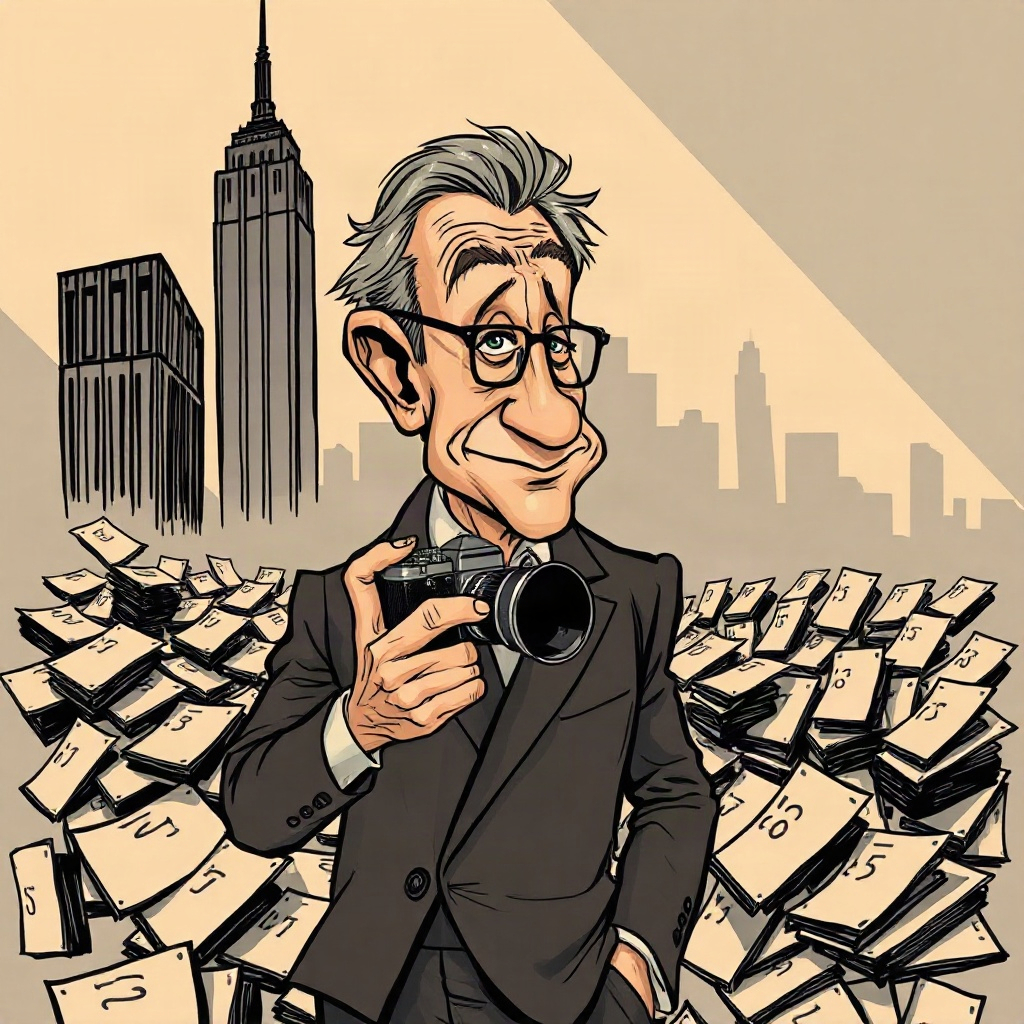
Arthur Elgort · Fashion Photographer
In the extensive archival records documenting the social and professional sphere of Jeffrey Epstein, few industries feature as persistently as the high-fashion ecosystem of New York and Paris. Among the prominent cultural figures appearing in Epstein’s personal directories is veteran fashion photographer Arthur Elgort. Known globally for his dynamic, snapshot-style editorial work in publications such as Vogue and his portraiture of the world’s most recognizable supermodels, Elgort represents a fixture of Manhattan's creative elite during the decades when Epstein was aggressively integrating himself into high-society networks. An examination of public records, court filings, and police documentation provides clear parameters regarding what is documented about their relationship, while distinguishing verified evidentiary traces from broad speculation.
Arthur Elgort established his reputation in the early 1970s, fundamentally transforming fashion photography by moving models out of rigid studio sets and into fluid, outdoor, naturalistic environments. Over five decades, Elgort worked as a mainstay for Condé Nast publications, directing campaigns for major international fashion houses and shaping the careers of legendary models. Given his prominent position in New York cultural life and the fashion industry, Elgort moved through overlapping social circles that frequently converged with the corporate and commercial spheres Epstein sought to influence. As investigative journalists and legal teams dissected Epstein’s network following his federal indictment, figures from the photography, modeling, and editorial worlds were scrutinized to assess the degree to which Epstein utilized their networks to identify and exploit young women.
The concrete documentary connection between Epstein and Elgort rests primarily within Epstein's compiled contact directories, colloquially referred to as his black books. These materials originated from the 2005 to 2006 investigation conducted by the Palm Beach Police Department, during which local detectives and federal investigators recovered address listings maintained by Epstein’s personal assistants. When an extensive iteration of this contact directory was made public in early 2015, Elgort’s name was identified among hundreds of influential figures spanning politics, academia, finance, and entertainment. The entry for Elgort included direct contact numbers and addresses corresponding to his long-standing photography studio in the SoHo neighborhood of Manhattan, confirming that Epstein or his administrative staff had cataloged Elgort's contact details.
Related articles
Jeffrey Epstein and Peggy Siegal
Investigative report on publicist Peggy Siegal and her documented role in Jeffrey Epstein's post-conviction social rehabilitation in Manhattan.
Read article →
Jeffrey Epstein and Steve Bing
Investigative review of Hollywood producer Steve Bing's documented appearances in Jeffrey Epstein's flight logs, contact books, and elite networks.
Read article →
Jeffrey Epstein and Jean-Luc Brunel
Investigative dossier detailing modeling agent Jean-Luc Brunel's financial ties to Jeffrey Epstein, sexual abuse allegations, and his 2022 death in custody.
Read article →
Jeffrey Epstein and Linda Fiorentino
An investigative examination of actress Linda Fiorentino's appearance in Jeffrey Epstein's contact records and their documented social intersections.
Read article →