Jeffrey Epstein &
116 East 65th Street
Former Manhattan residence of Ghislaine Maxwell
Key Facts
$4,950,000
Purchase Price (2000)
NYC ACRIS Property Records
$15,000,000
Sale Price (2016)
NYC ACRIS Property Records
116 East 65th Street LLC
Legal Ownership Entity
NYC ACRIS Property Records
Ghislaine Maxwell
Primary Inhabitant
SDNY Trial Exhibits (2021)
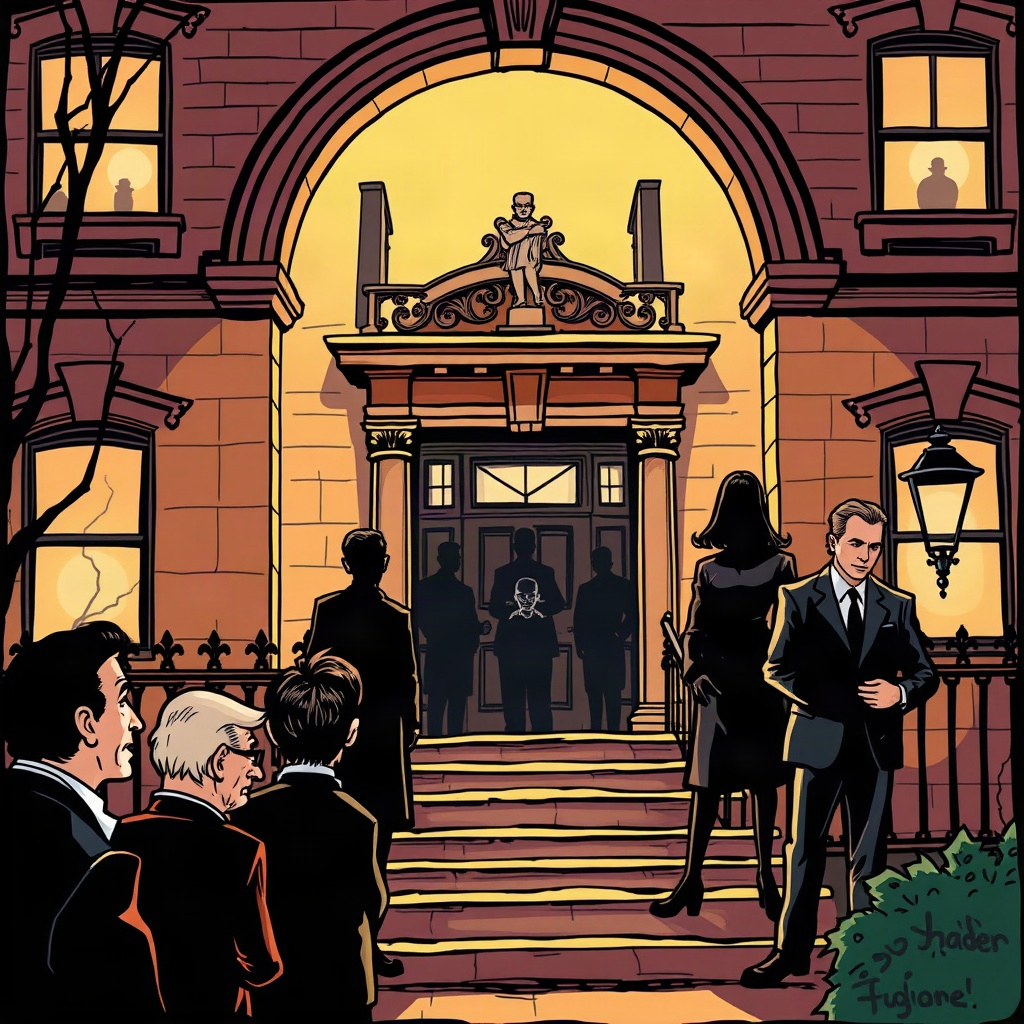
116 East 65th Street · Former Manhattan residence of Ghislaine Maxwell
Tucked along a quiet, tree-lined residential corridor between Park and Lexington Avenues on Manhattan's Upper East Side, the townhouse at 116 East 65th Street long projected an aura of discreet aristocratic refinement. For more than fifteen years, the four-story residence served as the primary New York base for Ghislaine Maxwell, the British socialite convicted in 2021 of federal sex trafficking charges alongside Jeffrey Epstein. While public attention during federal raids in July 2019 centered heavily on Epstein's colossal mansion at 9 East 71st Street, investigative records, unsealed civil depositions, and trial exhibits demonstrate that the property on 65th Street operated as an essential satellite in the broader architecture of Epstein's personal and operational orbit.
Property deeds and corporate filings filed with the New York City Department of Finance reveal that 116 East 65th Street was acquired in October 2000 for $4.95 million. The purchase was executed under the veil of an anonymous corporate vehicle, 116 East 65th Street LLC, a common mechanism utilized by high-net-worth figures to obscure residential ownership. While Maxwell was the public face and inhabitant of the residence, records produced during federal prosecutions and civil litigation demonstrated that Epstein provided the financial capital required to secure and maintain the property. The transaction formed part of a long-standing pattern in which Epstein subsidized Maxwell's lavish lifestyle, binding her financially to his enterprises while providing her with a distinguished venue to entertain international elites, financiers, and high-society contacts.
Geographically, the townhouse was positioned roughly six blocks southeast of Epstein's sprawling mansion on East 71st Street. This proximity permitted Maxwell to maintain continuous daily contact with Epstein's operations while retaining an ostensibly independent domestic headquarters. The interior of the property, characterized by classical molding, a grand curved staircase, and an expansive rear garden, was frequently described in contemporary press profiles as a hub of high-society networking. However, records later unsealed in the defamation suit Giuffre v. Maxwell and federal court filings in United States v. Maxwell positioned the residence in a far darker light, revealing it as an auxiliary staging ground for social cultivation and administrative coordination.
Related articles
Jeffrey Epstein and Great St. James
Investigative report on Jeffrey Epstein's 2016 purchase of Great St. James, illicit island development, regulatory battles, and USVI civil litigation.
Read article →
Jeffrey Epstein and 49 East 66th Street
An investigative review of 49 East 66th Street, examining public records, Epstein contact archives, and Upper East Side real estate connections.
Read article →
Jeffrey Epstein and 22 Avenue Foch
Investigative report on Jeffrey Epstein's luxury apartment at 22 Avenue Foch in Paris, detailing police raids, survivor accounts, and legal fallout.
Read article →

Jeffrey Epstein and American Yacht Harbor
Investigative analysis of American Yacht Harbor in St. Thomas, the primary transit hub and staging ground for Jeffrey Epstein's private island.
Read article →